$30 vs $50 Scratch-Offs: Is the Premium Tier Worth It?
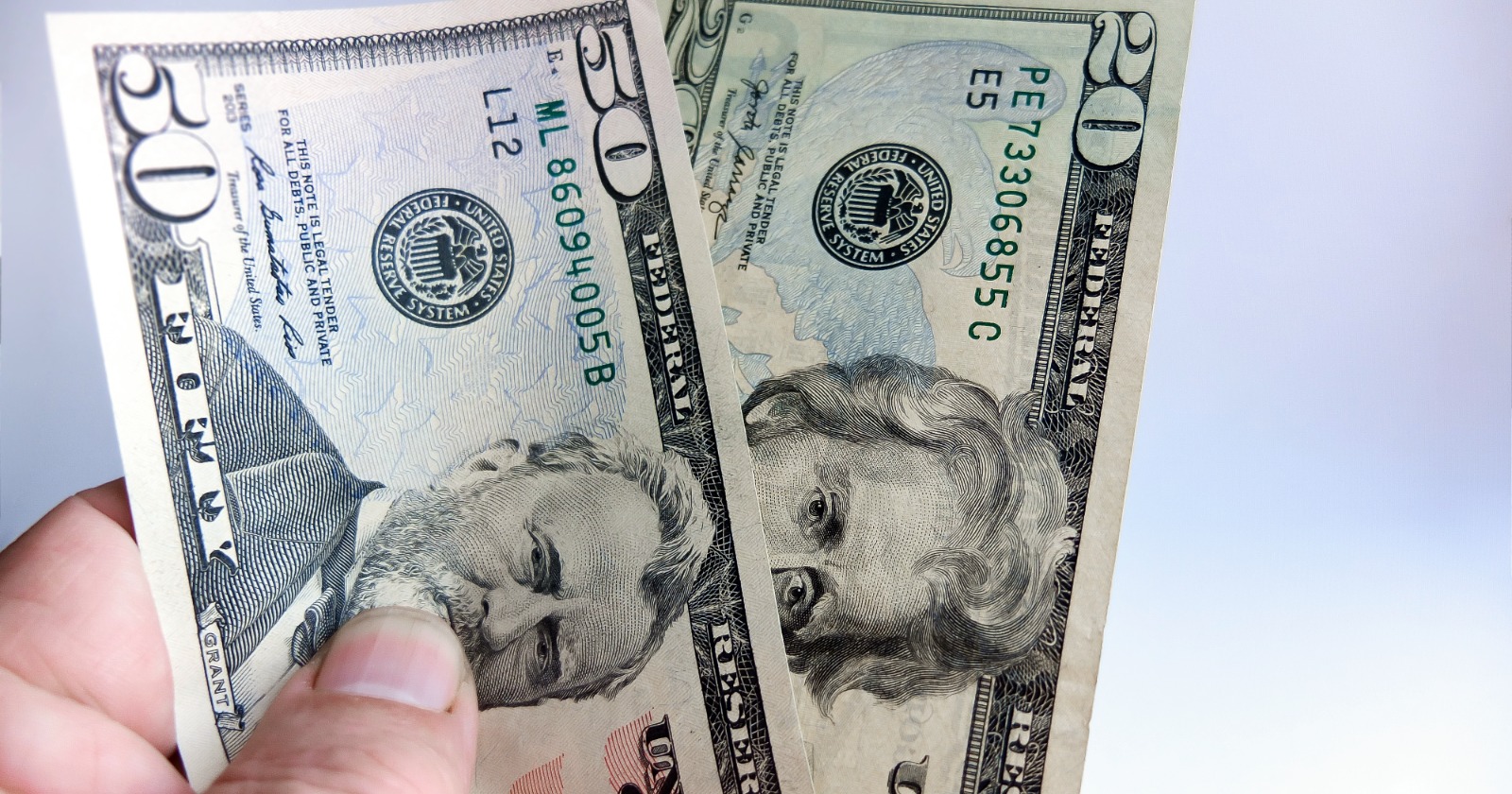
If you're spending at the premium end of the scratch-off shelf, the jump from $30 to $50 looks like it should buy you better everything. It mostly doesn't. Across 135 active premium games in 20 states, $50 tickets return only marginally more per dollar than $30 tickets, and they actually have worse overall odds. The $50 tier buys you a higher prize ceiling, not better value. For most players, $30 is the smarter premium pick.
The Numbers Side by Side
Averaging current data across Texas, California, New York, Florida, Massachusetts, and 15 other states:
$30 tickets: 78.5% average payout, overall odds of 1 in 3.26 (92 games)
$50 tickets: 79.8% average payout, overall odds of 1 in 3.75 (43 games)
The $50 tier wins on payout by just 1.3 percentage points. But the $30 tier wins decisively on overall odds: 1 in 3.26 versus 1 in 3.75. That means you win something on roughly 31% of $30 tickets versus 27% of $50 tickets. The cheaper premium ticket actually pays out more often.
This is the opposite of the pattern at lower price points, where higher prices reliably bring tighter odds. At the premium end, that relationship breaks. The $30 tier is the structural sweet spot, with the best overall odds of any price point in the entire scratch-off catalog, and $50 doesn't improve on it.
What the Dollar Difference Looks Like
Take a $300 budget, which divides evenly into ten $30 tickets or six $50 tickets.
Ten $30 tickets at 78.5% payout: expected loss of $64.59.
Six $50 tickets at 79.8% payout: expected loss of $60.66.
The $50 route saves about $3.93 in expected loss on $300 spent. That's real but small, less than the difference you'd capture by simply choosing the best-structured game within either tier. And it comes at the cost of winning less often, since the $50 odds are looser. For a player who values the experience of frequent wins, that tradeoff tilts back toward $30.
Where $50 Actually Wins: The Prize Ceiling
The genuine advantage of the $50 tier is the size of the top prize. The biggest scratch-off jackpots in the country are almost all $50 games, because only a $50 ticket generates the revenue to fund a $10 million, $20 million, or $25 million top prize. The two largest scratch-off wins in US history, both $25 million, came from $50 games.
If your specific goal is a shot at the largest possible scratch-off prize, the $50 tier is where those prizes live. A $30 ticket simply doesn't carry a $25 million top prize. So the question isn't really "which tier is better value," it's "what are you playing for." If you want the best odds and payout combination, $30. If you want access to the biggest jackpots and accept slightly worse odds to get it, $50.
The Best Games at Each Tier Right Now
The averages matter less than the specific game you buy, and the best games at each tier are excellent. At $30, current standouts include California's Crossword Xtreme (VS 97.3, 1 in 2.72, 80.1% payout), Arizona's Million Dollar Crossword (VS 96.9, 1 in 2.30, 7 top prizes remaining), and Georgia's GRANT (VS 95.9, 82.9% payout). These rank among the best games in the entire country at any price.
At $50, the leaders are equally strong on their own terms: Michigan's $8,000,000 Payout (VS 96.7, 81% payout), Maryland's $5,000,000 LUXE (VS 94.7, 1 in 2.50, the tightest odds in the $50 tier), and Pennsylvania's Million Dollar Win It All (VS 94.3, with 20 top prizes remaining, an unusually intact pool). A top-ranked $50 game is a genuinely strong buy. The point isn't that $50 games are bad. It's that they aren't categorically better than $30 games, and they win less often on average.
Why the Premium Tiers Behave This Way
The reason $30 has the best odds in the catalog comes down to how lotteries position the tier. The $30 price point is where states put their flagship games to compete for serious players, so they structure those games with the tightest odds they offer. The $50 tier exists more to support the largest jackpots, which requires concentrating more of the prize pool at the top. Concentrating prizes at the top means fewer mid-tier and small wins distributed across the run, which loosens the overall odds.
In other words, the $50 tier trades win frequency for a higher ceiling by design. That's not a flaw, it's the product working as intended for players who want the big jackpot shot. But it explains why the odds get worse moving from $30 to $50 when they got better at every step below.
The Verdict
For value and win frequency, $30 is the better premium tier. It has the best overall odds of any price point in the catalog and a payout rate within about a point of $50, at a lower cost per ticket.
For chasing the largest jackpots, $50 is the only tier that carries $10 million-plus top prizes, and its payout edge is real if small. You accept worse odds for the bigger ceiling.
For nearly everyone else, the more important decision is which specific game you buy, not which tier. A top-ranked $30 game beats a poorly ranked $50 game on every metric, and vice versa. Before you spend $30 or $50, the ValueScore rankings and state pages on ScratchCheck show every active premium game ranked by payout rate, odds, and remaining top prizes, so you can find the best option at whichever tier fits what you're playing for.
Frequently Asked Questions
Are $50 scratch-offs better than $30 scratch-offs?
Not usually. $50 scratch-offs return only slightly more per dollar than $30 tickets, but they have worse overall odds, so they do not give you better value in most cases. The $50 tier mainly buys a higher prize ceiling, not a better overall betting proposition.
Which tier has the better payout rate?
$50 tickets have a slightly higher average payout rate, but only by about 1.3 percentage points. That small edge is usually not enough to outweigh the worse odds, especially if you care about winning more often.
Why do $50 tickets exist if $30 is better value?
$50 tickets exist because they fund the biggest top prizes in the scratch-off market. If you want a shot at jackpots like $10 million, $20 million, or $25 million, the $50 tier is where those prizes live. The tradeoff is looser odds and less frequent wins.

Phil Nageotte is a writer covering scratch-off odds, expected value, prize data, and more. He joined ScratchCheck in 2026 after years of tracking lottery payouts in spreadsheets of his own.