How Are Lottery Winnings Taxed?
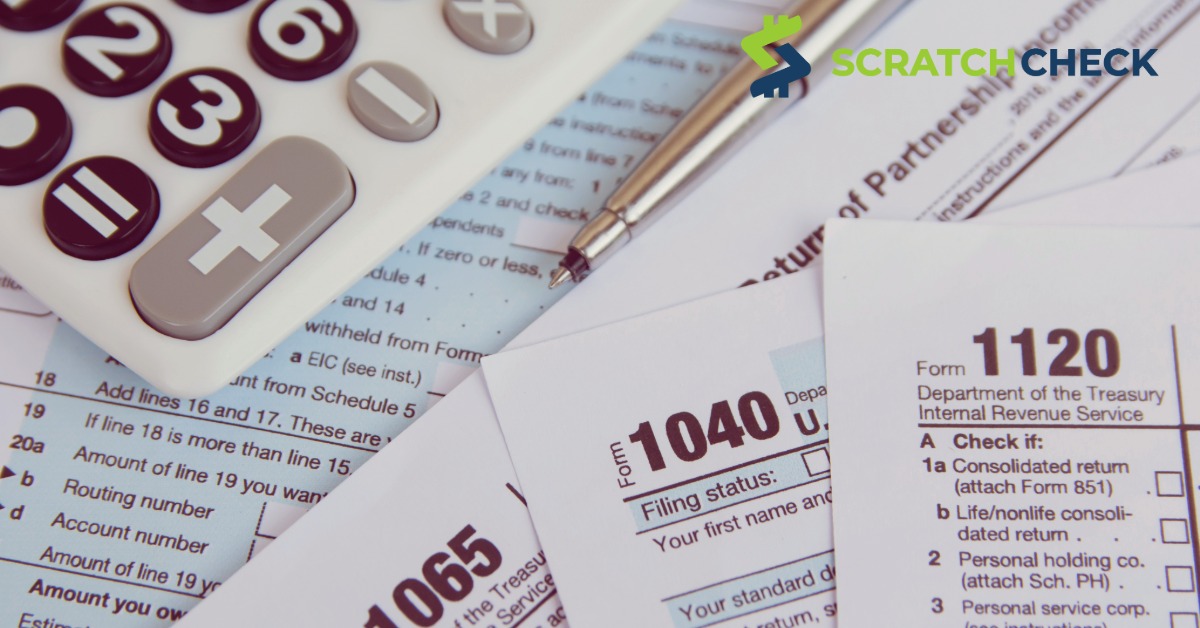
Winning a scratch-off feels straightforward until you start calculating what you actually get to keep. The number on the ticket is not the number that lands in your bank account. Federal taxes come off first. State taxes follow, and the rate depends on where you live and where you bought the ticket. If the prize is large enough, you'll owe more than what gets withheld at payout. Understanding how the math works before you claim is worth doing, especially for anything over a few hundred dollars.
This is not tax advice. For any significant prize, a CPA familiar with gambling income is worth consulting before you make financial decisions. What follows is an accurate breakdown of how lottery taxes work at the federal and state level based on current 2025-2026 rules.
Federal Taxes: The 24% Withholding Is Just the Starting Point
The IRS treats lottery winnings as ordinary income, taxed at the same rates as wages or salary. For prizes over $5,000, the lottery is required to withhold 24% for federal taxes before you see a dollar. On a $50,000 scratch-off win, that's $12,000 withheld immediately.
The 24% withholding is a floor, not a ceiling. Federal income tax brackets are progressive, with the top rate at 37% on income above $626,350 for single filers in 2025. If your lottery prize pushes your total income into that bracket, you owe the difference between the 24% already withheld and whatever your actual marginal rate turns out to be when you file your return. On a large jackpot, that gap can be substantial. The IRS withheld 24% upfront, but your actual liability could be 37%, meaning you owe another 13 percentage points when April arrives.
A concrete example: you're a single filer making $45,000 per year and you win $100,000 on a scratch-off. Your combined taxable income is now $145,000. The lottery withholds $24,000 at payout. When you file your return, your total federal tax bill on $145,000 works out to roughly $27,600 (applying the 2025 brackets progressively). Subtract the $24,000 already withheld and you owe about $3,600 more at filing. The 24% withholding covered most of it, but not all.
For small scratch-off prizes under $600, there's no automatic withholding and no Form W-2G. But the winnings are still taxable income and you're legally required to report them on Schedule 1 of your Form 1040 under "Other Income." Most people don't do this for $5 wins. The IRS doesn't typically chase small amounts, but the obligation exists.
For prizes between $600 and $5,000, the lottery issues a Form W-2G to document the winnings, but withholding doesn't kick in until $5,000. You'll have the paperwork but no tax taken out at payout, meaning the full tax bill is on you at filing time.
State Taxes: Where You Live Makes a Significant Difference
State taxes on lottery winnings vary more than most people realize, and the spread between best and worst states is large enough to meaningfully change a winner's outcome. An identical $1 million scratch-off prize can result in hundreds of thousands of dollars more or less depending purely on geography.
Eight states impose no state tax on lottery winnings at all: California, Florida, Texas, New Hampshire, South Dakota, Tennessee, Washington, and Wyoming. Federal taxes still apply in all of these states, but the state takes nothing. California is the most notable case because the state otherwise has some of the highest income tax rates in the country, yet lottery winnings are specifically exempt from California state income tax. A $1 billion Powerball jackpot won in California avoids state tax entirely while the same ticket purchased in New York gets hit with 10.9% at the state level.
On the other end of the spectrum, New York has the highest state withholding rate at 10.9%. New York City residents face an additional local tax of 3.88%, bringing the combined state-plus-city rate to 14.78%. Yonkers adds its own local rate on top of the state rate. New Jersey and Washington DC both withhold at 10.75%. Oregon comes in at 9.9% and Minnesota at 9.85%.
The lower end of the taxing states is considerably more reasonable. North Dakota withholds just 2.9%, Pennsylvania 3.07%, Indiana 3.15%, and Ohio 3.99%. If you're in one of these states, the state bite is manageable. If you're in New York City, the combined federal and local hit can approach 53% on income in the top bracket.
The Illinois $536 Million Example
In early 2025, a $536 million Mega Millions jackpot ticket was sold in Illinois, a state that taxes lottery winnings at 4.95%. Had that ticket been sold in Florida or Texas, the winner would have kept roughly $12 million more, purely from the absence of state income tax. The numbers on the ticket were identical. The geography of the purchase made a $12 million difference in the actual payout.
This isn't an argument for driving to another state to buy lottery tickets. But it illustrates how much the tax landscape varies and why location matters when evaluating a large win.
What Happens If You Win in a State You Don't Live In
Most states only withhold taxes from residents who buy tickets and win within that state. If you live in Georgia and you're traveling through Virginia when you buy a winning scratch-off, Virginia will generally not withhold state tax from your prize. You'd still owe Georgia state tax on the winnings when you file your Georgia return.
Two states are exceptions to this: Arizona and Maryland both withhold state taxes from non-residents. If you buy a winning ticket in either of those states while visiting, they'll take their cut at payout regardless of where you live. You may then owe tax in your home state as well, with a credit for the amount already withheld in Arizona or Maryland. The interaction can get complicated and is another reason why large prizes warrant professional tax guidance.
Can You Deduct Losing Tickets?
Yes, but with significant limitations. Gambling losses, including the cost of losing scratch-off tickets, are deductible only if you itemize deductions on Schedule A. You cannot take the standard deduction and also deduct gambling losses. Most Americans take the standard deduction, which means most lottery players get no deduction at all for their losing tickets.
If you do itemize, losses can only be deducted up to the amount of your gambling winnings for the year. You can't use scratch-off losses to offset your wages or other income. And under the One Big Beautiful Bill Act passed in mid-2025, the deduction is now capped at 90% of winnings, meaning even a player who exactly broke even on their lottery spend will owe federal taxes on 10% of what they won.
To claim gambling losses, you need documentation: receipts, tickets, a detailed log of purchases and winnings. Keeping a basic record of what you spend on scratch-offs throughout the year is worth doing if your spending is significant and you itemize.
Sharing a Prize With Family or Friends
If you win and want to share the prize with others, the gift tax rules come into play. For 2025 and 2026, you can give up to $19,000 per person per year without triggering gift tax reporting requirements. Amounts above that per-person annual limit count against your lifetime gift and estate tax exemption, which is currently $15 million per individual under the 2026 extension of the TCJA.
If you're part of an informal lottery pool and one person claims the prize on behalf of the group, the IRS treats the claimant as having received the full prize, with any amounts shared with others treated as gifts. The better approach for pool wins is to have a signed written agreement before claiming that documents each member's share, which allows the lottery to issue separate W-2G forms to each participant and keeps each person responsible for their own tax liability.
Lump Sum vs. Annuity (For Large Draw Game Prizes)
Scratch-off prizes are typically paid as lump sums. But if you're also playing Powerball or Mega Millions via ScratchCheck's Powerball or Mega Millions pages, the lump sum vs. annuity decision has significant tax implications.
The advertised jackpot is the annuity value, paid out over 29 annual installments. The lump sum cash option is typically around 60% of the advertised number. Taking the lump sum means all of it is taxed in a single year, almost certainly at the 37% top federal bracket. Taking the annuity spreads the income over decades, potentially keeping each annual payment in a lower bracket, though inflation and investment return considerations cut the other way.
For scratch-offs specifically, prize amounts are almost always paid as one-time lump sums regardless of size. The lump sum vs. annuity question typically only applies to draw games with multi-million dollar jackpots.
The Practical Bottom Line
For prizes under $600, no withholding but technically reportable income. Most people don't report small scratch-off wins and the IRS rarely pursues them, but the legal obligation exists.
For prizes between $600 and $5,000, you'll get a W-2G but no withholding. Budget for the full tax bill at filing and don't spend the entire prize before you've set aside what you'll owe.
For prizes over $5,000, 24% comes out at payout. Set aside an additional 10-15% if your total income will push you above the 24% bracket. Add state taxes on top of that based on where you live.
For any prize significant enough to materially change your financial situation, hire a CPA before you claim. The decision of how and when to claim, whether to set up a trust, how to handle sharing the prize, and how to plan for the quarterly estimated tax payments you may now owe are all decisions where professional advice pays for itself.
For the scratch-off data itself (which games are active in your state, what odds look like, and which games still have top prizes remaining), the state-by-state rankings on ScratchCheck cover all of that. The tax question only becomes relevant after you win. The value question starts before you buy.
Frequently Asked Questions
Are lottery winnings taxed as income?
Yes. The IRS treats lottery winnings as ordinary income, taxed at your regular income tax rates.
Do you have to pay state tax on lottery winnings?
It depends on the state. Some states have no lottery tax, while others take up to around 10% or more.
Do you have to report lottery winnings under $600?
Yes. Even winnings under $600 must be reported as income, though no tax form is issued automatically.

Phil Nageotte is a writer covering scratch-off odds, expected value, prize data, and more. He joined ScratchCheck in 2026 after years of tracking lottery payouts in spreadsheets of his own.