What the Back of the Ticket Doesn't Tell You
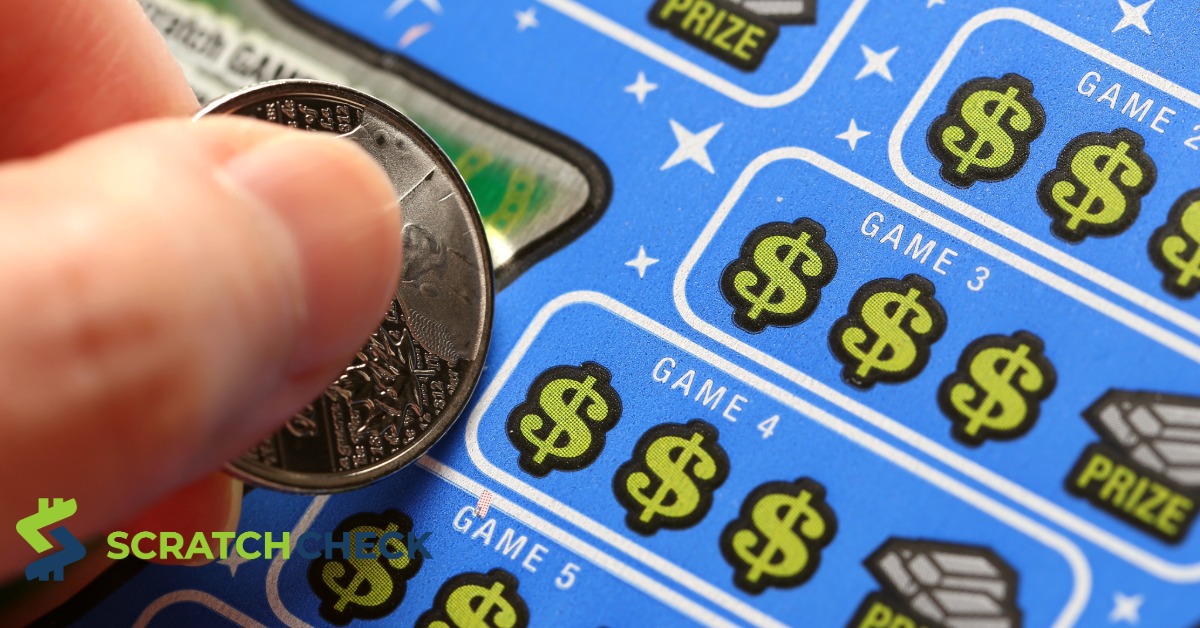
Every scratch-off ticket has information printed on the back. Overall odds. A prize table. Fine print about claiming deadlines. Most players glance at it, or don't look at all. But even the players who read every word are missing the information that actually determines whether a ticket is worth buying right now.
Here is what the back of the ticket cannot tell you, and where to find it.
Whether the Jackpot Still Exists
The odds printed on the back are calculated at the time of printing across the full print run of the game. A game with 1 in 3.00 overall odds has those odds when it launches and those same odds two years later. The number never changes regardless of how many jackpots have been claimed.
Right now, roughly 10% of scratch-off games on store shelves nationwide have zero top prizes remaining. The game keeps selling. The odds on the back look normal. Nobody at the register is going to tell you. The ticket gives you no indication.
In Connecticut, a $50 game with outstanding overall odds has been sitting on shelves with no top prize left for months. Plenty of players have bought it because the odds look good. The jackpot was gone before they walked in.
Every state lottery publishes remaining prize counts by game, updated daily. ScratchCheck pulls this data and filters dead games out of its rankings automatically. Two minutes of checking before you buy is the difference between playing a live game and chasing a prize that no longer exists.
How the Prizes Are Actually Distributed
The prize table on the back of a ticket lists every prize tier and the odds of winning each one. What it doesn't show you is whether those prizes are front-loaded at the bottom tiers or spread meaningfully across mid-tier prizes that are worth winning.
Two games can have identical overall odds and identical top prizes but completely different player experiences. One might have 70% of its prize budget concentrated in $2 and $4 break-even prizes with almost nothing in the $50 to $500 range. The other spreads its prize budget more evenly so small wins feel like actual wins rather than just getting your money back.
The prize table technically shows this if you do the math yourself, calculating expected value at each tier and adding them up. Almost nobody does that at a gas station counter. ValueScore accounts for prize quality across all tiers as one of its four components, so games with healthier prize distributions rank higher than games that look good on paper but concentrate wins at the bottom.
What You're Giving Up Per Dollar
Payout rate is the percentage of total ticket sales that gets returned as prizes across the whole game. A game with a 78% payout rate returns 78 cents per dollar in prizes. A game with a 62% payout rate returns 62 cents. Over time and across many purchases, that 16-cent gap per dollar is real money.
Payout rate is not printed on the ticket. Most players have never seen this number for any game they have played. Some state lotteries publish it buried in game documentation. ScratchCheck surfaces it for every game where the data is available, letting you compare directly across games at the same price point before you buy.
The pattern holds across virtually every state: payout rates are lowest on cheap tickets and highest on expensive ones. A $1 ticket might return 58 cents per dollar. A $30 ticket from the same state might return 80 cents. The ticket itself gives no indication of this difference.
How It Compares to Every Other Game on the Display
The back of one ticket tells you nothing about the ticket next to it. You could be holding a game with 1 in 4.50 odds while a game with 1 in 2.90 odds sits two slots over at the same price. The display is not sorted by value. Nobody arranges scratch-off tickets to help you make the best decision.
In April 2026, Georgia has 12 games in the national top 50 by overall odds. Iowa has four. New York has none in the top 20. A player buying a random $20 New York ticket is playing a different game, statistically, than a player buying a well-chosen $20 Iowa ticket, even if both tickets cost the same and both backs look similarly formatted.
Comparison requires an outside reference point. The ticket cannot provide one.
Whether the Game Is About to End
When a lottery ends a scratch-off game, it sets a redemption deadline, usually 90 days to one year after the end-sale date. Tickets purchased near the end of a game's run might have a shorter window to claim prizes than tickets purchased at launch. Nothing on the ticket tells you where in the game's lifecycle you are buying.
A game with strong odds, a healthy prize table, and one top prize remaining might be ending next month. That's not inherently a reason not to buy it, but knowing the game is winding down is useful context. ScratchCheck tracks ending-soon games so players can see which ones are in their final weeks before prizes expire.
The Short Version
The back of the ticket tells you the rules of the game as it was designed. It does not tell you the current state of the game as it actually exists today. Remaining prizes, payout rate, prize quality distribution, competitive comparison, and game lifecycle are all things that materially affect whether a ticket is worth buying right now, and none of them appear anywhere on the ticket.
State lotteries publish all of this data because they are required to. ScratchCheck pulls it daily and puts it in one place. Checking before you buy takes less time than scratching the ticket. The information has always existed. It just hasn't been easy to find until now.
Browse current odds, ValueScores, payout rates, and remaining prizes for every active game in your state at ScratchCheck.
All lottery data sourced from official state lottery publications and updated daily at ScratchCheck.com
Frequently Asked Questions
Why doesn’t the back of a scratch-off ticket tell the full story?
Because it only shows the game as it was designed, not how it exists today. The odds and prize table are fixed at launch and never update, even after major prizes are claimed. That means the ticket can look identical whether it’s fresh or effectively played out.
Can a scratch-off ticket still be sold if all the top prizes are gone?
Yes, and it happens more often than people think. A game can stay on shelves long after the last jackpot is claimed, with nothing on the ticket indicating that. From a player’s perspective, you’re buying into a game that can no longer deliver its headline prize.
Why are the printed odds misleading for older scratch-off games?
They assume the full prize pool is still in play, which isn’t true once prizes start getting claimed. A 1 in 3.00 game with most top prizes gone is not the same as a new 1 in 3.00 game. The odds didn’t change, but the opportunity did.

Jessie Jurado is a news writer who covers new scratch-off launches, state lottery guides, taxes on winnings, news, and much more. She joined ScratchCheck in 2026 and writes the site's state-by-state coverage.