
Who Owns the Winning $12.8 Million Lottery Ticket? A Fired Manager and Circle K Are About to Find Out
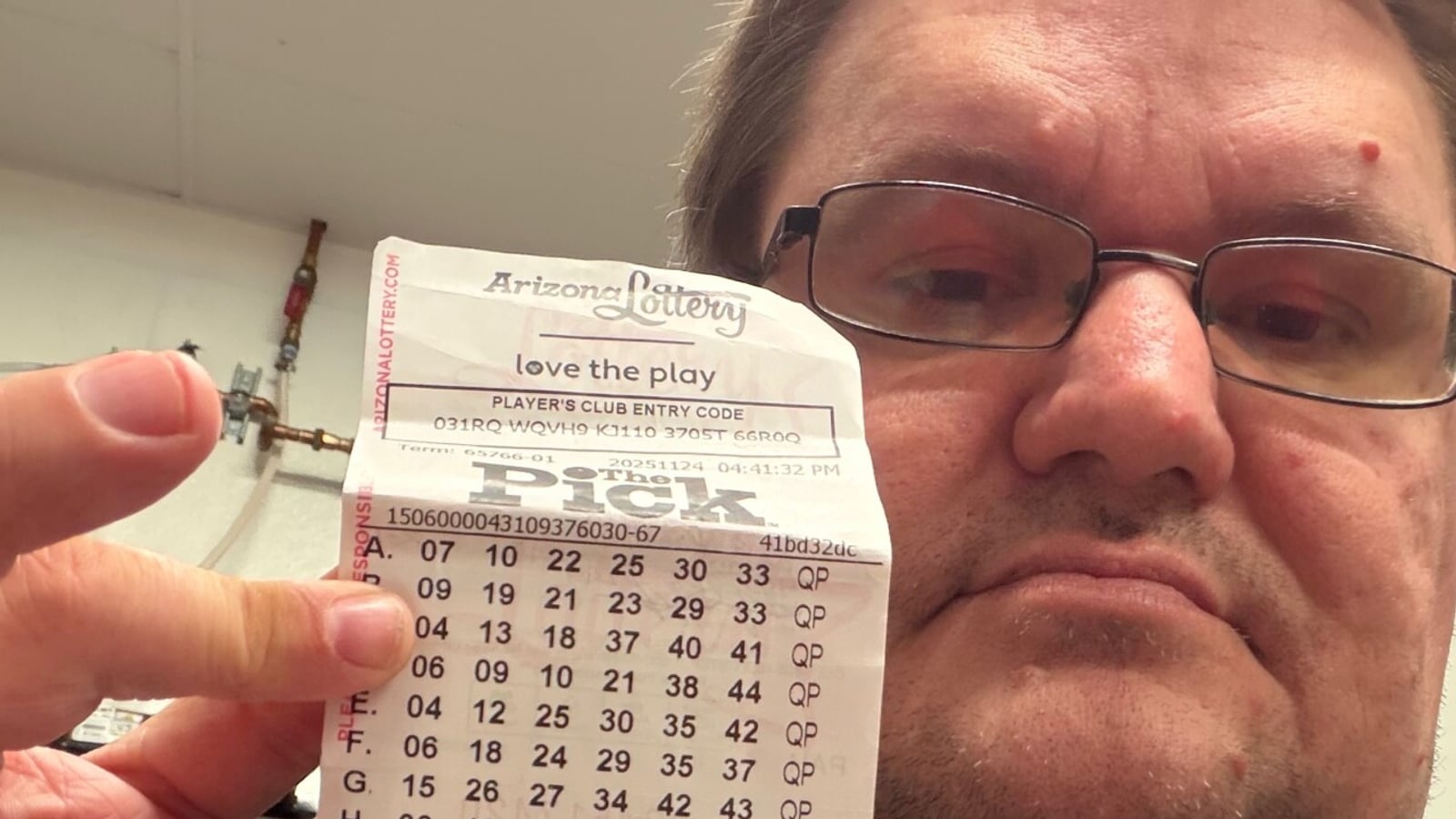 Photo from: Kolsrud Law Offices
A $12.8 million lottery ticket has been sitting untouched in an Arizona corporate office since last November, and a judge will decide who it belongs to.
Robert Gawlitza, the former Scottsdale Circle K store manager at the center of the fight, spoke publicly to 12News for the first time, describing the moment he realized a ticket sold at his store was worth millions.
"Is this real?" Gawlitza recalled thinking. "It's like a numb feeling. You don't know. Like, is this real in my hand?"
How a leftover ticket became a jackpot
In November 2025, a customer walked into the Scottsdale convenience store and asked a clerk to print $85 worth of Arizona Lottery "The Pick" tickets. According to Gawlitza, the customer only had $60 to pay, but all $85 worth had already printed, leaving the extra tickets behind. The next morning, after arriving for work, Gawlitza found that one of those leftover tickets matched all six winning numbers, worth $12.8 million.
The manager's account
"I made a managerial decision," Gawlitza said. "I decided to clock out of the store and end my first shift, take care of this issue, so I'm abiding by the rules, and then I proceeded to clock back in and then start my second shift."
After representing himself for several months, Gawlitza has retained attorney Josh Kolsrud, who says evidence obtained during the case backs his client. "It was sold validly to Robert, and he did so in a way that complied with, we would argue, Circle K's written and unwritten policies," Kolsrud said.
Kolsrud says Circle K maintained a longstanding practice of requiring employees to buy accidentally generated lottery tickets with their own money, and that six current or former Circle K managers and employees signed sworn affidavits saying the policy had existed for years.
"They would have them pay for the tickets, and that would actually teach them, 'Hey, don't do it next time, because next time it's going to be you that's going to have to pay for these tickets,'" Gawlitza said.
Kolsrud also points to language in Circle K's employee handbook, which he says permits employees to buy lottery tickets while off duty even though they cannot while on the clock. Gawlitza additionally provided 12News with text messages in which he asked his district manager whether an employee could clock out, remove their work shirt, purchase a lottery ticket and return to work. According to those messages, the district manager replied, "Yes."
What Circle K is asking for
Circle K's legal action asks a judge to determine whether the ticket was legally sold and purchased, whether the transaction complied with Arizona Lottery regulations, and ultimately who is the rightful owner of the ticket and its $12.8 million prize. The company is not asking the court to award it the jackpot. It is asking for a ruling on ownership.
Circle K leadership fired Gawlitza in January 2026.
"It was hard, but it made me grow closer to my family. I spent more time with my kids, spent more time with my fiance, and spend more time at church," Gawlitza said. "It's made it more of a humbling experience."
Why ownership fights like this get messy
A lottery ticket normally behaves a lot like cash. Whoever holds it can usually claim it, which is why lotteries tell you to sign the back the moment you buy one. This case turns on a different question: whether the ticket was ever validly sold in the first place, and whether a store manager could buy tickets printed at his own store. Retailers sell tickets as agents of the lottery rather than as ordinary merchants, which is part of why the rules around who may buy what are so specific (more on how retailers get paid).
Disputes over whether a ticket is valid are rare, but they do happen. An Indiana player learned that the hard way when he scratched a $100,000 winner and the lottery said no.
For now the ticket sits untouched at Circle K's corporate offices, nobody has been paid, and the judge has not ruled. If you play in the state, current Arizona scratch-offs are on our Arizona page.
Sources
Frequently Asked Questions
How did the winning ticket end up unsold?
In November 2025 a customer asked a clerk to print $85 worth of Arizona Lottery "The Pick" tickets but only had $60 to pay, and the full $85 worth had already printed. The extra tickets were left behind, and the next morning Gawlitza found one matched all six numbers.
What is Circle K asking the court to do?
Circle K asked a judge to determine whether the ticket was legally sold and purchased, whether the transaction complied with Arizona Lottery regulations, and who rightfully owns it. The company is not asking to be awarded the jackpot itself.
Has anyone been paid the $12.8 million?
No. The ticket has remained untouched at Circle K's corporate offices since the November 2025 drawing, and the judge has not ruled on who is entitled to claim the prize.

Jessie Jurado is a news writer who covers new scratch-off launches, state lottery guides, taxes on winnings, news, and much more. She joined ScratchCheck in 2026 and writes the site's state-by-state coverage.
Related Articles

Colorado's six holiday scratch-offs pay the same as every other ticket at their price, so the top prizes decide
Oct 19, 2026, 3:18 PM EDT

Wisconsin's holiday scratch-offs include a $15 ticket, just one of three sold anywhere in the US
Oct 18, 2026, 3:00 PM EDT

Maryland's new $20 scratch-off pays at least $100 on every win, but only 1 in 8.74 tickets wins
Oct 17, 2026, 1:29 PM EDT