How Are Scratch-Off Tickets Made?
At some point almost everyone who plays scratch-offs wonders how the ticket actually works. The prize is printed under that gray coating before the ticket ever reaches a gas station. Nobody tampers with it in transit. The lottery doesn't know which specific ticket you'll pick out of the dispenser. So how does any of this hold together? The answer is more interesting than most people expect, and it explains a few things about how the games are structured that aren't obvious from the outside.
It Started in 1974
The modern scratch-off ticket was invented in 1974 by a company called Scientific Games Corporation. The key innovation was using a computer to randomize prize placement across a print run rather than doing it by hand. Before that, lottery games required a draw or a manual process. The ability to print a fixed, computer-determined outcome onto a ticket and hide it under an opaque coating created an entirely new category of instant game.
Today Scientific Games and a handful of other large manufacturers handle the printing for most US state lotteries. The equipment and security requirements involved are closer to currency printing than to a standard commercial print shop.
The Ticket Starts as a Giant Reel of Paper
Scratch-off tickets are printed on specialized paper stock that comes in reels weighing over a ton each. The paper itself is engineered to resist tampering, it tears in specific ways when delamination is attempted, which is one of several built-in fraud deterrents.
That reel feeds through a high-speed printing line at rates that can exceed 900 feet per minute. Everything that ends up on the finished ticket gets applied during that continuous run, across roughly 20 separate processes from base layer to final packaging.
The Prize Goes On First, Then Gets Buried
Here's the part that surprises most people: the winning or losing outcome is printed early in the process, before most of the other layers. The prize symbols get applied and then immediately covered by subsequent ink and coating layers. Think of it as a sandwich, the prize information sits in the middle, protected on both sides.
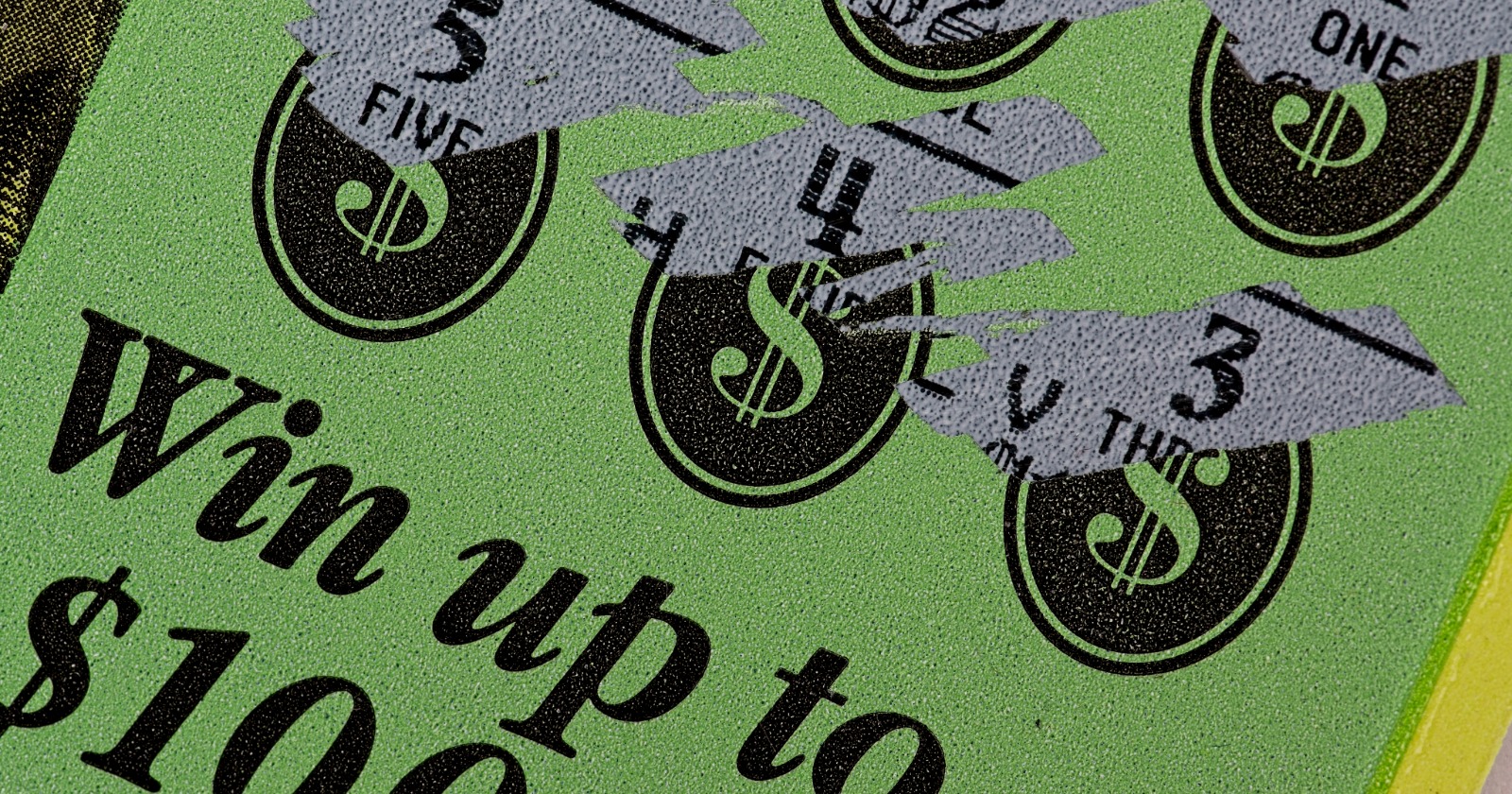
The scratch-off coating goes on top of all of that. Older tickets used metal foil applied under high pressure. Modern tickets use multiple layers of acrylic resin coating, which turned out to be harder to defeat than foil was. The coating process involves several distinct layers: a primer, a confusion pattern that obscures the numbers when viewed from certain angles, the lottery numbers reprinted over that confusion layer, a sealing coat, a bonding coat, and then a final hardening layer on top. Six or more coating passes just for the scratch-off area.
The result blocks light penetration effectively enough that even a flashlight over 100 times brighter than a standard one can't read through it. You have to physically remove the coating to see what's underneath, which is the point.
How the Randomization Actually Works
The prize distribution across a print run isn't random in the way rolling dice is random. It's a controlled distribution. The lottery commissions a game with a specific prize structure, say, two top prizes, forty $1,000 prizes, ten thousand $20 prizes, and so on, and the printing system places those prizes at computer-determined intervals across the full print run.
After printing, the individual tickets get stacked and physically shuffled before being packaged into rolls. This breaks up any sequential pattern in how the prizes were placed. A roll of 300 tickets bought from a single dispenser won't contain a predictable distribution of winners because the shuffling process disrupts that.
Each ticket also gets a unique serial number added by an industrial inkjet printer during the process. That serial number is cryptographically linked to the ticket's outcome, it's what the lottery terminal reads when you go to claim a prize. The relationship between serial number and outcome is encrypted so that even knowing how the encoding works doesn't let you decode a ticket without scratching it.
Why You Can't Cheat by Looking at the Serial Number
Over the years, people have tried several methods to decode tickets without scratching. Candling, holding a bright light behind the ticket to read through the layers, was a real problem early on and is part of why the coating systems got as opaque as they are now. Delamination, where someone separates the ticket's physical layers to expose the prize area, is another method that manufacturers specifically engineer against. The paper stock is designed to tear or distort in a way that visibly damages the ticket when separation is attempted.
The serial number angle has also been attempted. If someone could decode the algorithm that links serial numbers to outcomes, they could identify winning tickets before buying them. Lottery security teams are specifically aware of this attack and the encoding systems are designed to make it computationally infeasible. The serial number encoding gets updated as printing technology and cryptographic standards evolve.
What This Means for How You Play
Understanding the manufacturing process clarifies something important: the outcome of your ticket was determined before it left the printing facility, possibly months before you bought it. There's no mechanism by which scratching harder, buying at a particular time of day, or picking from the middle of the dispenser changes anything. The prize structure is fixed and distributed across the print run before a single ticket is sold.
What does change over time is how many prizes remain unclaimed in a game. As tickets from a print run get purchased and winning tickets get redeemed, the remaining pool shifts. A game early in its run has its full prize structure intact. A game that's been active for a year has had most of those prizes claimed. That's the one variable a player can actually account for, and it's exactly the data that ScratchCheck tracks by state.
If you want to see which games in your state still have significant prizes in the pool, the best odds rankings and remaining prize counts give you a read on where the better-structured games currently stand.
Frequently Asked Questions
How do scratch-off tickets actually work?
The outcome is printed during manufacturing and sealed under multiple layers. The result is already determined before you buy the ticket.
Are scratch-off tickets random when you buy them?
Not at the point of purchase. The distribution of winners is pre-determined across the entire print run, then shuffled before being sold.
Can you tell if a scratch-off ticket is a winner without scratching it?
No. Modern tickets use layered coatings and encryption to prevent reading or decoding the result without physically scratching it.

Jessie Jurado is a news writer who covers new scratch-off launches, state lottery guides, taxes on winnings, news, and much more. She joined ScratchCheck in 2026 and writes the site's state-by-state coverage.