How Many Scratch-Off Tickets Are in a Roll?
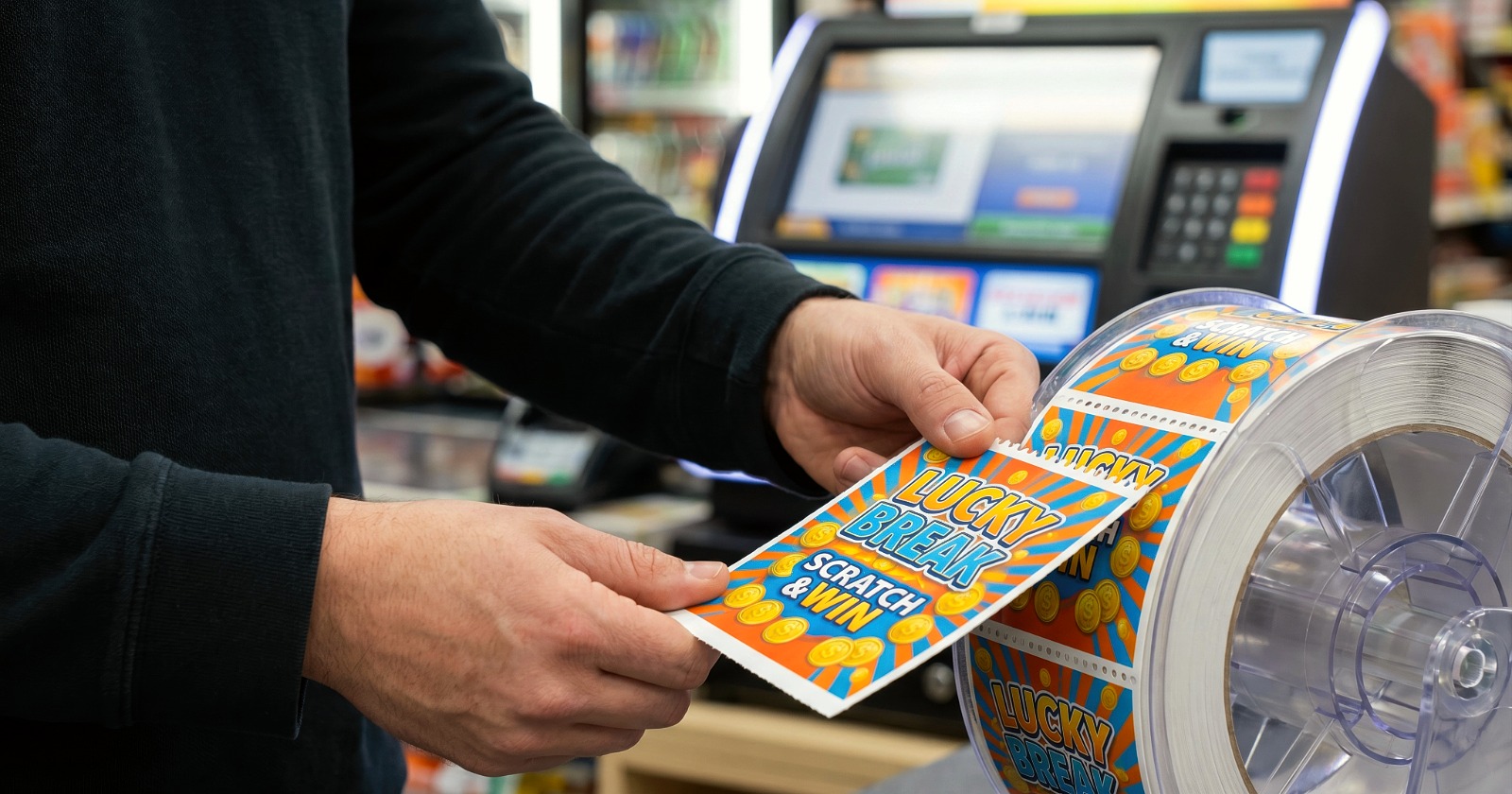
The number of tickets in a roll depends entirely on the ticket price, and the pattern is more deliberate than most people realize. A roll of $1 scratch-offs might hold 300 tickets while a roll of $30 tickets holds 50. The number changes, but the total dollar value of a roll stays remarkably consistent, usually landing somewhere between $300 and $1,500. That consistency isn't an accident. It's how lotteries keep their retail logistics manageable.
The Quick Answer by Price Tier
Here are typical pack sizes across most state lotteries. Exact counts vary by state and sometimes by individual game, but these ranges hold widely:
$1 tickets: typically 150-300 per roll ($150-$300 face value)
$2 tickets: typically 100-150 per roll ($200-$300 face value)
$3 tickets: typically 100 per roll ($300 face value)
$5 tickets: typically 50-60 per roll ($250-$300 face value)
$10 tickets: typically 50 per roll ($500 face value)
$20 tickets: typically 50 per roll ($1,000 face value)
$30 tickets: typically 50 per roll ($1,500 face value)
$50 tickets: typically 20 per roll ($1,000 face value)
The general trend: as the ticket price goes up, the number of tickets per roll goes down, but the total value of the roll stays in a similar range.
Why Lotteries Keep Roll Value Consistent
The reason rolls are sized by dollar value rather than ticket count comes down to retail management. A lottery wants retailers to handle a predictable dollar value per roll regardless of which game it is. A retailer activating a roll of $1 tickets and a roll of $30 tickets is managing roughly the same financial exposure and inventory value in each case.
If $1 tickets came 50 to a roll like $30 tickets do, retailers selling cheap tickets would be constantly restocking empty dispensers. A $1 roll of 50 tickets would sell out at $50 in revenue, requiring frequent replacement. By putting 150-300 tickets in a $1 roll, the lottery keeps the restocking frequency manageable while maintaining a face value comparable to the pricier games.
New York provides one of the cleanest examples of this logic. From $5 and up, every New York Lottery scratch-off pack holds exactly 50 tickets, so the face value scales directly with price: $5 packs are $250, $10 packs are $500, $20 packs are $1,000, and $30 packs are $1,500. Below $5, New York uses larger packs so retailers aren't restocking $1 dispensers constantly, with a $1 pack still ending up around $300 in face value.
Roll, Pack, or Book?
You'll hear three terms used interchangeably, but they have technical distinctions worth knowing:
A pack is the sealed unit shipped from the lottery distributor to the retailer. A roll is the physical cylinder of tickets displayed on the dispenser at the counter once the retailer loads it. A book is another term for the same unit, used more commonly in some states. In most stores, one pack equals one roll. The retailer activates the pack on their lottery terminal, loads it onto the dispenser, and sells tickets sequentially from the start of the roll.
When you buy a single ticket, you're getting the next ticket in sequence from whatever roll is currently loaded. The ticket number printed on your ticket tells you its position in the roll.
Can You Buy a Whole Roll?
Yes. There's no law in any state preventing you from buying an entire roll of scratch-off tickets. People do it as gifts, for office pools, or to chase a specific game's prizes. A few things to know before you try:
Ask the retailer first. Not every store will accommodate a full-roll purchase, especially for expensive games, and some may need to order a fresh pack or activate one from the back. You'll pay the full face value upfront. A roll of $5 tickets runs $250-$300, a roll of $20 tickets runs $1,000, and a roll of $30 tickets runs $1,500. You'll get every ticket in that pack in sequential order, from the first to the last.
Does Buying a Whole Roll Improve Your Odds?
This is the question most people are really asking. The answer is nuanced. Buying a whole roll does not change the overall odds printed on the ticket, and it does not guarantee you'll profit. What it does is give you the full prize distribution of that specific roll.
Most rolls return 60-80% of what you spend, consistent with the game's payout rate. If you spend $500 on a roll, expect to get back roughly $300-$400 on average. To profit, you'd need to hit a prize larger than the gap between what you spent and what the small and mid-tier prizes return, which usually means hitting a $500+ prize somewhere in the roll. Most rolls don't contain one.
The win rate within a roll follows the game's overall odds. A game with 1 in 4 overall odds means roughly 25% of the tickets in any roll win something, mostly small amounts. In a roll of 50 tickets at 1 in 4 odds, expect roughly 12-13 winning tickets, the majority of them returning the ticket price or a small multiple of it.
The one informational edge buying a roll gives you: if you check a game's remaining top prizes before buying a full roll, you can avoid sinking money into a game whose best prizes have already been claimed. A game showing 0 top prizes remaining is a poor candidate for a full-roll purchase since the ceiling is gone. The state rankings on ScratchCheck show remaining top prizes for active games, which is worth checking before committing several hundred dollars to a single roll.
The Sequential Ticket Number
Every ticket in a roll has a sequential number indicating its position. Some players believe they can use these numbers to gauge where the winners are, but the prizes in a roll are distributed randomly by the printing process. There's no reliable pattern in the sequence that lets you predict which position holds a winner. The shuffling done at the manufacturing stage specifically prevents sequential prize patterns.
What the ticket number is useful for: confirming you received consecutive tickets when buying multiple, and verifying your position if you're tracking a roll you bought into. It's a logistics tool, not a prediction tool.
For checking which games currently offer the best odds, payout rates, and remaining prizes in your state before buying a single ticket or a whole roll, the ScratchCheck state pages rank every active game by the metrics that actually matter.
Frequently Asked Questions
How many scratch-off tickets are in a roll?
A scratch-off roll can have anywhere from about 20 to 300 tickets depending on ticket price, with lower-priced games usually having more tickets per roll.
Can you buy a whole roll of scratch-off tickets?
Yes, you can buy a whole roll if the retailer allows it, but you must pay the full face value upfront and may need the store to activate a fresh pack.
Does buying a whole roll of scratch-offs improve your odds?
Buying a whole roll does not change the printed odds or guarantee profit, but it gives you every ticket in that specific pack and its full small-prize distribution.

Jessie Jurado is a news writer who covers new scratch-off launches, state lottery guides, taxes on winnings, news, and much more. She joined ScratchCheck in 2026 and writes the site's state-by-state coverage.