What Scratch Cards Are the Best to Buy?
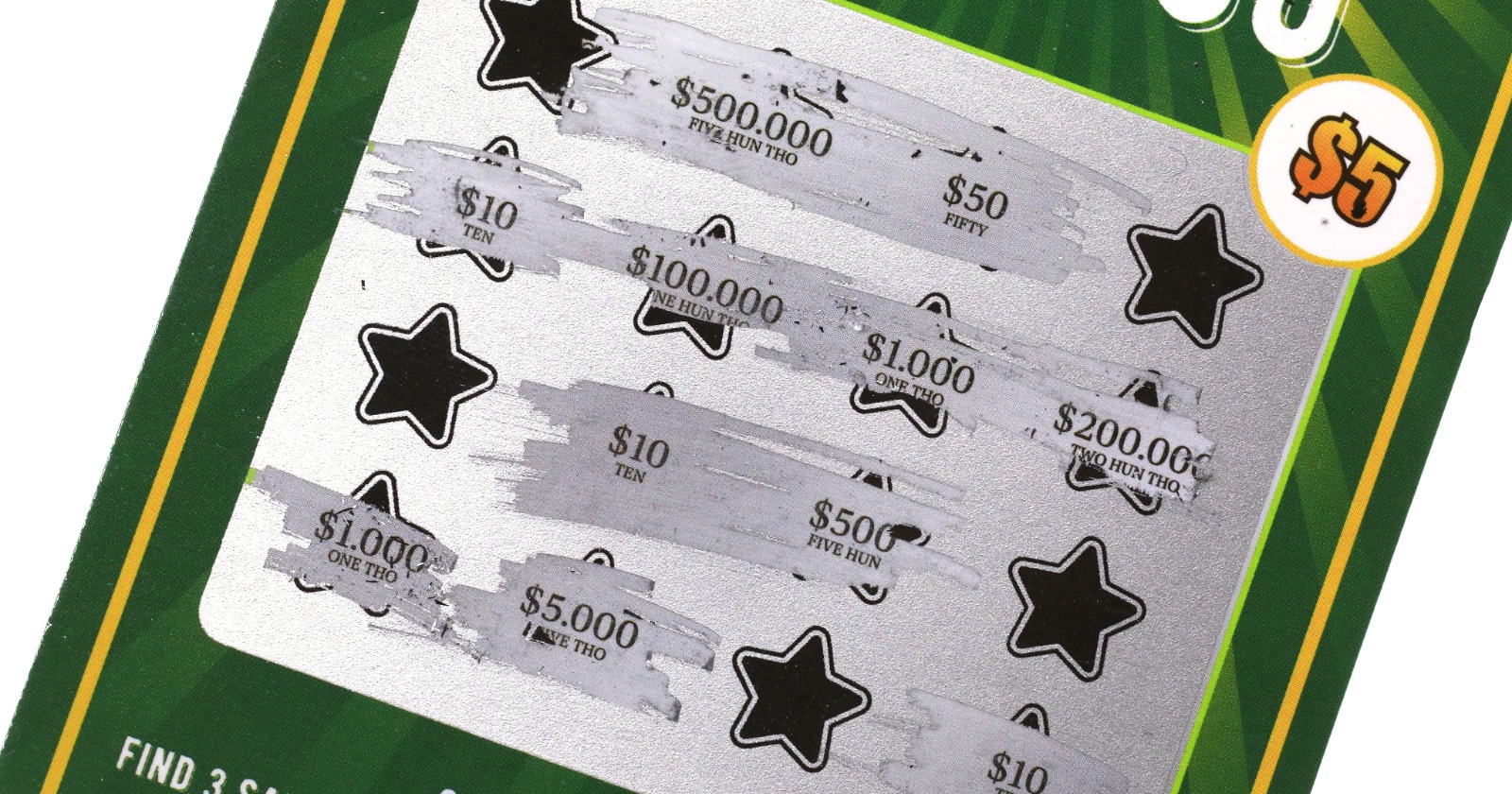
The honest answer is that "best" depends on what you're after and which state you're in, because the best scratch card is different in Texas than in Massachusetts, and it changes as games launch and prizes get claimed. But there's a reliable framework for finding the best card available to you at any given moment, and it comes down to three numbers. Get those three right and you'll consistently buy better cards than the player next to you grabbing whatever looks shiny.
The Three Numbers That Define a Good Scratch Card
Every scratch card can be judged on three metrics, and the best cards score well on all three at once.
Payout rate is the percentage of money the game returns to players. A card returning 80% gives back $0.80 per dollar on average. Higher is better. The best cards run 78-87% payout. Anything under 65% is weak.
Overall odds is your chance of winning any prize. A card with 1 in 3 odds means roughly one in three tickets wins something. Tighter odds (a lower second number) means you win more often. The best cards run between 1 in 2.3 and 1 in 3.5.
Top prizes remaining is how many of the biggest prizes are still unclaimed. This is the one most players ignore and the one that matters most. A card whose top prizes are all gone is a worse buy than its odds suggest, because the ceiling you're playing for no longer exists.
A card that scores well on all three is a genuinely good buy. ScratchCheck combines these into a single ValueScore from 0 to 100, so you don't have to weigh them yourself, but understanding the three inputs tells you why a card ranks where it does.
The Best Cards in the Country Right Now
To make this concrete, here are some of the highest-ValueScore cards with intact prize pools across the country at the moment. These rotate constantly, but they illustrate what a top-tier card looks like:
California's Crossword Xtreme ($30) leads nationally with a ValueScore of 97.4, odds of 1 in 2.72, and an 80.1% payout. Arizona's Million Dollar Crossword ($30) sits at VS 97 with the tightest odds of the group at 1 in 2.30 and 7 top prizes remaining. Georgia's GRANT ($30) hits an 82.9% payout at 1 in 2.58. Massachusetts' $2,000,000 STACKED ($20) combines an 85.6% payout with 11 top prizes still remaining, one of the most intact prize pools among top-ranked cards.
Notice a pattern: nearly all of them are $30 cards, and several are crosswords. That's not a coincidence, and it points to where the best value tends to concentrate.
The $30 Tier Punches Above Its Weight
Across the national data, $30 cards consistently deliver the tightest overall odds of any price tier, averaging around 1 in 3.26 compared to 1 in 4.08 for $5 cards. State lotteries tend to put their best-structured games at the $30 price point, since that's where they compete for serious players. If you're willing to spend $30 and your state has a well-ranked card at that tier, it's frequently the best value available.
That said, the $10 tier is the sweet spot for players who want strong value at a lower price. It captures most of the payout improvement over $5 cards (averaging around 75% vs. 70%) at a fraction of the cost of premium cards. The jump from $5 to $10 is the single most valuable upgrade you can make. The jump from $10 to $20 is much smaller. So if budget matters, $10 is the smart floor, and $30 is the smart ceiling.
Crossword Cards Tend to Win More Often
Crossword-format cards appear disproportionately at the top of the odds rankings. The reason is structural: a crossword card creates many simultaneous win opportunities on a single ticket, which lets the game distribute frequent small and mid-tier wins. That pushes the overall odds tighter than a typical number-matching card at the same price.
If winning something more often is what you value, crossword cards are statistically a good bet, especially at the $5 and $30 tiers where they're strongest. If you're chasing a big top prize specifically, number-matching multiplier cards sometimes return more per dollar despite worse overall odds, because their wins are larger but less frequent.
The Mistake Almost Everyone Makes
The single biggest error is buying a card whose top prizes are already gone. A game can sit in the dispenser for months after its best prizes have been claimed. The card looks identical to the day it launched, the odds printed on the back are unchanged, but the prize you're hoping for no longer exists in the pool.
In every major state right now, several active cards have zero top prizes remaining. They're still for sale. A player who checks remaining prizes avoids these entirely. A player who doesn't has no way of knowing the ceiling is gone. This single check separates informed buyers from everyone else, and it takes about 30 seconds.
What Doesn't Make a Card "Best"
A few things players believe matter, that don't. The biggest advertised top prize means nothing on its own. A card touting a $5 million top prize with a 70% payout is a worse buy than one with a $500,000 top prize and an 83% payout, because the second card returns more money to players overall and you're statistically never winning the $5 million either way.
The card's design, theme, or how "lucky" it feels has zero effect on the outcome, which is fixed at printing. The retailer you buy from doesn't change the odds. The position in the dispenser doesn't matter. The only things that affect value are the three numbers: payout rate, overall odds, and remaining top prizes.
How to Find the Best Card in Your State
The best card for you is the highest-ranked one in your state at a price you're comfortable with, with its prize pool still intact. Since these rankings shift constantly, the practical move is to check before you buy rather than relying on a static list.
The ValueScore rankings on ScratchCheck sort every active card nationally by the combined score of all three metrics. The state pages let you filter to your state and sort by ValueScore, payout rate, overall odds, or remaining top prizes depending on which you weight most. The best payout rankings and best odds rankings isolate each individual metric if you'd rather optimize for one.
Thirty seconds of checking turns "whatever looks good at the counter" into a genuinely informed purchase. That's the entire difference between the best card and an average one, and it's available before you spend a dollar.
Frequently Asked Questions
What is the best scratch card to buy?
The best scratch card is usually the highest-ValueScore game in your state at a price you are comfortable with, especially if it has strong payout, tight odds, and top prizes still remaining.
What makes a scratch card worth buying?
A good scratch card has a high payout rate, tight overall odds, and remaining top prizes, because those three numbers determine the real value better than the design or theme.
Why should you check top prizes remaining before buying a scratch card?
Top prizes remaining matter because some active scratch cards are still sold even after their biggest prizes are already gone.

Jessie Jurado is a news writer who covers new scratch-off launches, state lottery guides, taxes on winnings, news, and much more. She joined ScratchCheck in 2026 and writes the site's state-by-state coverage.