
Kentucky lottery scam allegedly took more than $80,000 with a fake $250 million prize
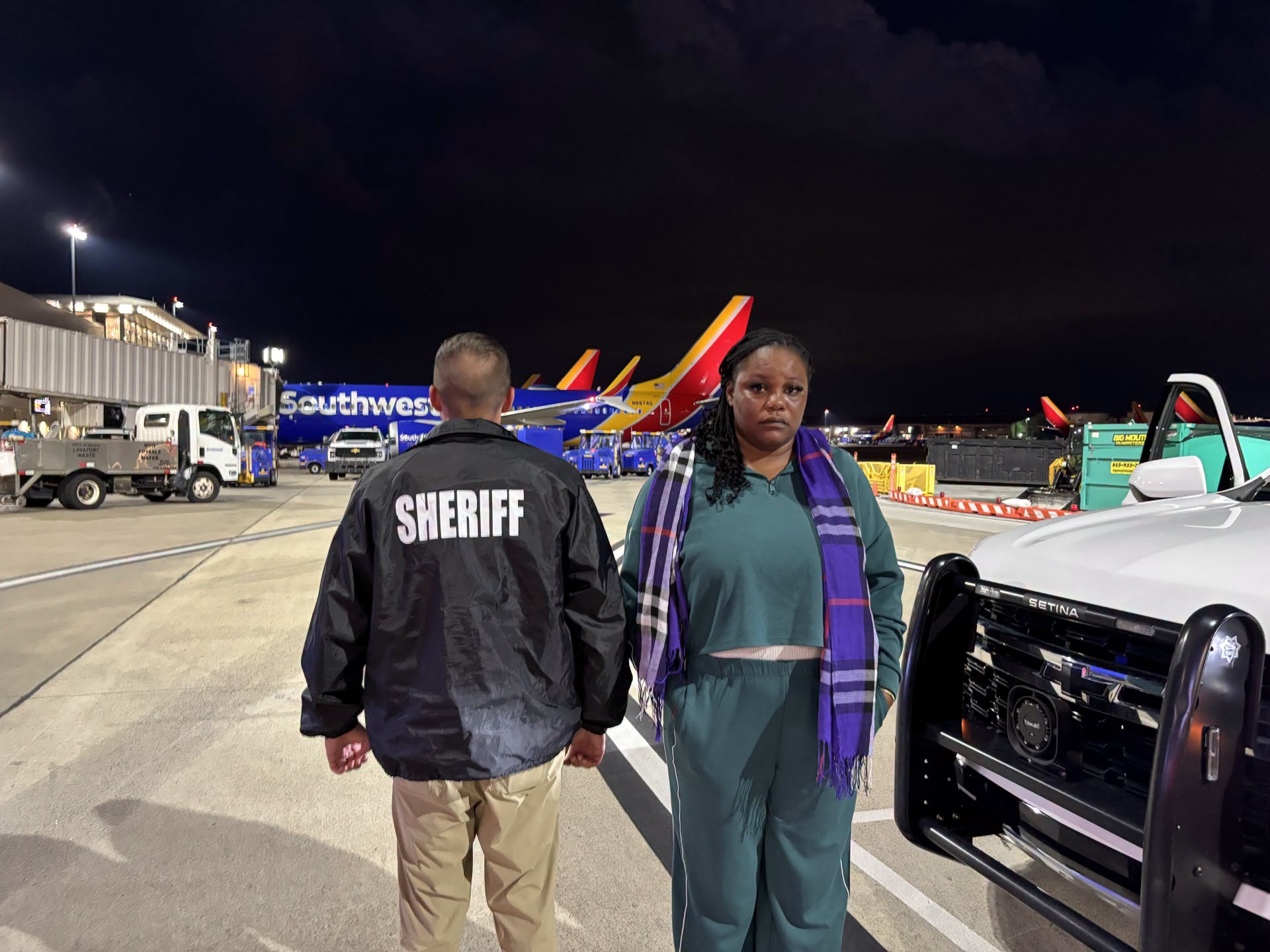
On the evening of August 20, US Marshals flew a woman into Nashville International Airport and handed her to Tennessee officials. The Graves County Sheriff's Office says she is the fourth suspect identified in a scam that took more than $80,000 from residents of one Kentucky county, on the promise of a lottery prize of $250,000,000 that never existed.
Sheriff Jon Hayden's office identified her as 29-year-old Jenel Chrissancia Rowe, said to have lived in both Florida and Jamaica, and said charges of theft by deception and engaging in organized crime are being sought. She faces extradition proceedings to transfer her to Graves County for prosecution. Three other suspects are being held in area jails awaiting court proceedings, and investigators have described six co-conspirators in total.
The arrest warrant
The arrest warrant quoted by the sheriff's office: the victims "were led to believe they were the recipient of $250,000,000 in lottery winnings and was instructed to deposit money directly into Rowes account to pay for IRS fees."
Tax on a US lottery prize is withheld from the prize itself. A lottery deducts 24% for federal tax and whatever the state takes before handing over the balance, and the winner settles any remaining bill when filing a return the following year. We have walked through those mechanics on prize after prize, most recently on a $4 million Massachusetts win where $624,000 came off at the counter.
Money moves in one direction only. There is no arrangement under which a winner sends funds to a lottery, an agent, or the IRS in order to unlock a prize, because the money the tax is owed on is already in the lottery's hands. Any request to pay first, whatever it is called, is proof the prize is a scam.
The names change and the script does not
Minnesota's attorney general lists the labels these fees arrive under: "fees for shipping, taxes, insurance, customs processing, etc." Payment is requested by wire through MoneyGram or Western Union, by check, or by handing over banking details. The office is blunt about the category: "Foreign Lotteries Are Illegal! If someone claims you've won a lottery in another country, it is a scam. Hang up the telephone immediately."
The Graves County case follows the pattern precisely, with one variation worth flagging. The approach came through the mail rather than by phone, which defeats the instinct that a scam sounds like a stranger calling. A letter carries an air of officialdom that a cold call does not.
This category is large and organized enough to have its own task force. Project JOLT, formed in 2009, pairs Homeland Security Investigations with the Jamaican Constabulary Force and includes the Postal Inspection Service, the FTC and the Department of Justice, with US agents stationed in Jamaica full time. Extraditions like this one are the reason it exists.
Who gets targeted, and what to do
Older people, overwhelmingly are targeted, and the aggression is part of the method. Minnesota's office notes callers may become "hostile, even threatening physical violence" when a target hesitates. We covered a case in Georgia where an 81-year-old lost more than $10,000 to the same playbook.
Three rules cover almost every version of it. You never pay to receive winnings. You cannot win a lottery you did not enter, and you cannot legally play a foreign lottery from the United States. And a real prize is claimed by you going to the lottery, not by anyone contacting you first, which is what our guide to claiming a prize describes at every step.
If money has already gone, tell the bank straight away, then report it to the FTC at 1-877-382-4357 and to the Postal Inspection Service at 1-877-876-2455 if the mail was used. The Graves County case is a reminder that these are investigated and that people are extradited over them, which is worth knowing for anyone embarrassed enough to stay quiet.
Sources
Graves County Sheriff’s Office: release on the extradition, August 21, 2026
Minnesota Attorney General: the Jamaican lottery scam
US Immigration and Customs Enforcement: Project JOLT and lottery scam extraditions
Frequently Asked Questions
What happened in the Graves County lottery scam?
The Graves County Sheriff’s Office says residents lost more than $80,000 in September 2025 after being told through the mail that they had won $250,000,000 and needed to deposit money to cover IRS fees. Investigators identified suspects in Florida and Jamaica. A fourth suspect, Jenel Chrissancia Rowe, 29, was flown into Nashville by US Marshals on August 20, 2026 and faces extradition to Kentucky. The allegations have not been proven in court.
Does the IRS ever ask lottery winners to pay fees upfront?
No. Tax on a US lottery prize is withheld from the prize itself before the winner receives anything, and any remaining balance is settled when they file a return. No legitimate lottery, and no government agency, asks a winner to send money in order to release winnings. A request to pay first is proof the prize does not exist.
How do I report a lottery scam?
Report it to the Federal Trade Commission at 1-877-382-4357 and, if the approach came by mail, to the US Postal Inspection Service at 1-877-876-2455. Tell your bank immediately if you have sent money, and tell local police. State attorneys general also take reports.

Jessie Jurado is a news writer who covers new scratch-off launches, state lottery guides, taxes on winnings, news, and much more. She joined ScratchCheck in 2026 and writes the site's state-by-state coverage.
Related Articles
South Carolina Circle K worker accused of cashing lottery tickets he never paid for
Oct 14, 2026, 12:11 PM EDT

Louisiana's four new scratch-offs hand out a free ticket on about 1 in 10 plays
Oct 13, 2026, 1:13 PM EDT
Minnesota's new $20 Mystery Prize Crossword wins 1 in 2.76 times and launches as the state's top-rated game
Oct 12, 2026, 12:46 PM EDT