
Sign the back of a winning scratch-off, but first decide who is claiming it

See more of our coverage in your search results.
A winning scratch-off with a blank back belongs to whoever has it in hand. The Michigan Lottery calls an unsigned ticket a “bearer instrument,” meaning “anyone in possession of it can claim the prize.” Signing it ties the ticket to the owner, which is why lotteries tell players to do it right away.
| State | What the lottery says |
|---|---|
| Michigan | An unsigned ticket is a bearer instrument |
| Connecticut | Whoever holds it owns it, and a signature shows the owner |
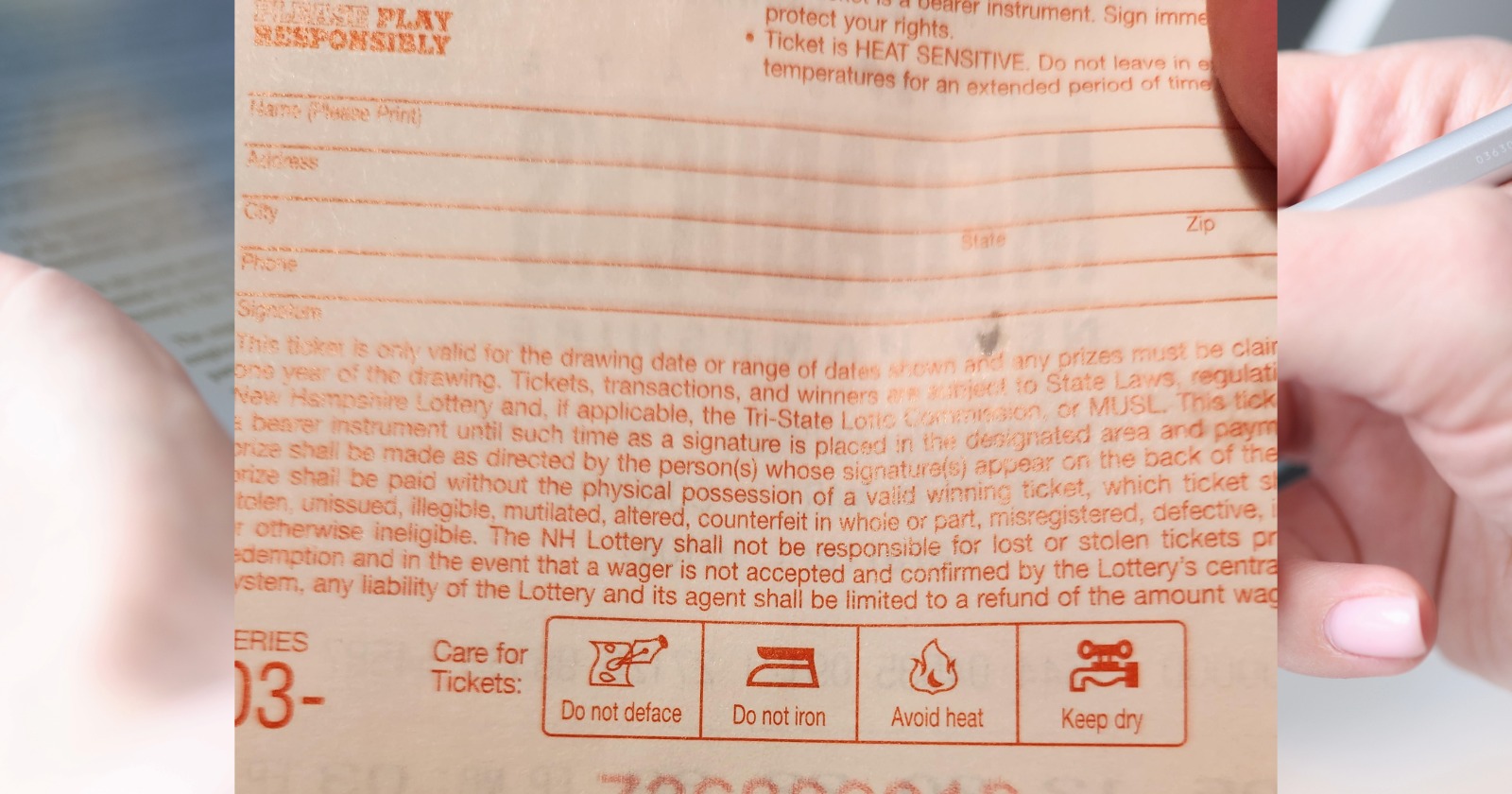
| New Hampshire | A bearer instrument until signed in the designated area |
| Georgia | Sign and print your name right after purchase |
| Texas | Sign upon receipt, and one claimant is paid per ticket |
| Florida | Signing shows ownership, and it is required at $600 or more |
| Pennsylvania | A bearer document until signed (2016 handbook) |
The Connecticut Lottery says it in fewer words. “Your signature indicates that you are the owner.” The New Hampshire Lottery's rules make each ticket a bearer instrument until a signature goes in the designated area. The Georgia Lottery tells players to sign and print their name on the back right after purchase, and the Texas Lottery says to sign the ticket upon receipt.
The signature also decides who claims. That matters for office pools and family tickets. The Florida Lottery says a group “must designate one person to sign the ticket on behalf of the group,” and a 2016 Pennsylvania Lottery handbook says “the person who signs the ticket will be the claimant of record.” Texas pays only one claimant per ticket, and that claimant can be an individual, a trust, a partnership, a corporation, or another legal entity. A trust does not guarantee privacy, though. The Pennsylvania handbook says the lottery will still release the name of the entity.
Florida says signatures are only required for tickets of $600 or more, and most tickets never get there. In our data on 2,304 active instant games, 99.93% of printed winning tickets pay less than $600. Florida's active games, though, still list 156,635 unclaimed prizes of $600 or more, worth about $689 million.
Our guides cover what happens if you lose a winning ticket, why stolen scratch-offs do not pay, staying anonymous, and the ID you need to claim.
Sources
Found this article useful?
Add ScratchCheck as a preferred source on Google to see our articles first.
Frequently Asked Questions
Should you sign the back of a scratch-off ticket?
Yes, lotteries recommend it. Michigan, Connecticut, and New Hampshire treat an unsigned ticket as a bearer instrument, so anyone holding it can claim the prize. Georgia and Texas tell players to sign right after buying.
Who should sign a lottery ticket won by a group?
One person. Florida says the group must designate one person to sign on its behalf, and a Pennsylvania Lottery handbook says the person who signs becomes the claimant of record. Groups should settle that before anyone signs.
Can a trust claim a lottery ticket?
In some states. Texas says a claimant can be an individual, a trust, a partnership, or another legal entity, and it pays one claimant per ticket. Pennsylvania notes it will still release the name of a claiming entity.
Related Articles

A misprinted scratch-off can look like a winner and still be worth nothing
Nov 23, 2026, 4:38 PM EST

Florida gives scratch-off winners 60 days to claim. Here is the lottery claim deadline in every state
Nov 23, 2026, 12:13 PM EST

Before a store sells a scratch-off, it activates the whole pack in the lottery terminal
Nov 19, 2026, 11:33 AM EST